
Zen-eX LLCSEWER & DRAIN SPECIALISTS570-629-5066
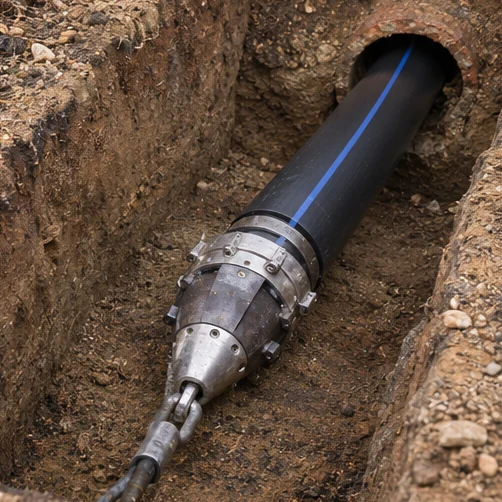
Pipe bursting head and new pipe at an access point

ZEN-eX · SEWER & DRAIN SPECIALISTS

Pipe Bursting

Pipe bursting replaces a sewer pipe along its existing route. It can reduce how much of the surface needs to be opened when the site and pipe are suitable.

Call 570-629-5066

Request Service

Prefer to request service by phone? Call 570-629-5066.

What pipe bursting involves

A bursting head displaces the old line as replacement pipe is pulled into place behind it. The method needs entry and exit access; additional access may be required where other lines reconnect. It is a way to replace pipe while limiting the length of an open trench.

What makes a property a good fit?

Route, pipe material, depth, nearby utilities, elevation changes and room for equipment all matter. Since the replacement follows the old route, a low spot or other grading problem may require a different plan.

Comparing scopes before you decide

Ask how much line will be replaced and where access pits and reconnections will be. Check how the estimate addresses pavement, landscaping and unexpected conditions, and who is responsible for any final restoration.
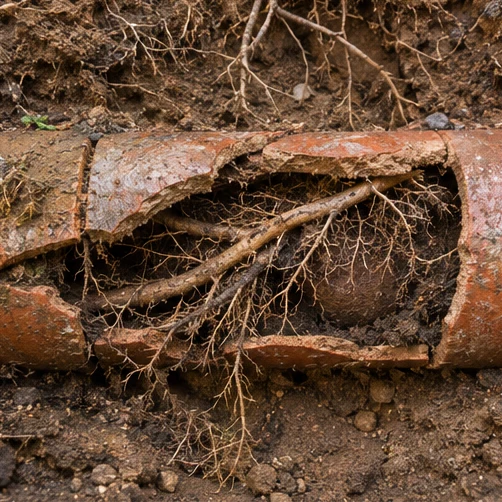
Roots inside an older sewer pipe

Frequently asked questions

Does it mean no digging?

No. It can avoid a continuous trench, but access pits and tie-in work still need room.

Is it the right fix for every broken line?

No. A site evaluation helps determine whether the existing route can be used or a different approach is needed.

What information helps?

Previous footage, known utility locations, and photos of driveways or retaining walls near the route are helpful.
ZEN-eX SERVICE GUIDE

What a project plan should identify

Pipe bursting can limit disturbance along the route, but the work still needs room to stage equipment and access both ends. Utility locations, turns in the route and branch connections can affect where access is possible. A contractor should be able to explain the sections that need to be opened before work begins.

Compare the parts of the written scope

  • Run length: the start and end points of the replacement.
  • Site access: where pits, equipment and reconnects are expected.
  • Restoration: who handles soil, paving, concrete or landscaping afterward.
  • Unknowns: what happens if a connection, obstruction or grade issue is found during work.

How to read a project photo

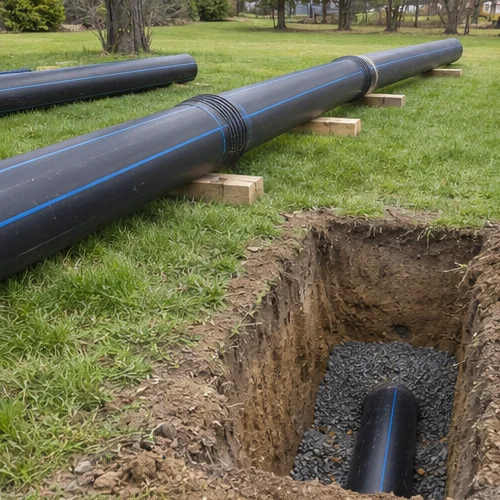
The pipe staged on grass tells you how the replacement is prepared; the access pit shows where work is concentrated. Neither photo tells you whether the same approach will fit a different yard. Site layout and pipe condition are part of the decision.

Replacement pipe staged near an access area

More questions homeowners ask

Can the new pipe use the old route under a driveway?

Sometimes. The line’s route and depth, access on both sides, and nearby utilities can change the plan.

Can pipe bursting fix a section that drains uphill?

Following the original path does not necessarily correct its slope. A grade problem needs its own evaluation.

Request service Call 570-629-5066